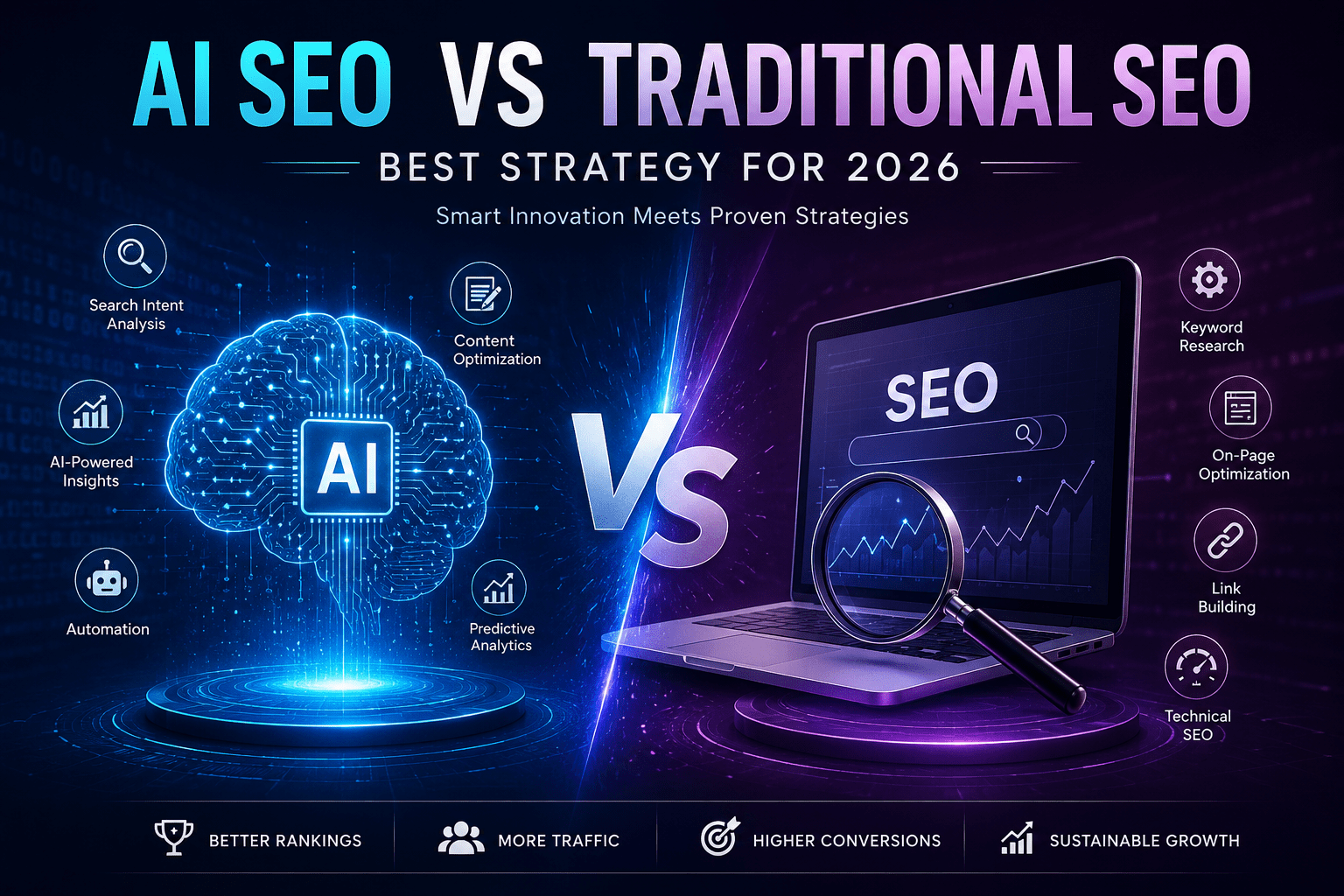

The world of Search Engine Optimization is evolving rapidly. With Artificial Intelligence becoming a core part of search engines, many businesses are wondering whether traditional SEO practices are still effective. Google’s algorithms have become smarter, focusing on user intent, content quality, and overall experience rather than simply matching keywords.
As we move through 2026, the debate around AI SEO vs Traditional SEO is becoming increasingly important. Businesses that understand how both approaches work can create a stronger digital marketing strategy and achieve sustainable rankings in search results.
The reality is that AI is not replacing SEO. Instead, it is changing how SEO works. Understanding these changes can help businesses stay competitive in an increasingly digital marketplace.
Understanding Traditional SEO
Traditional SEO refers to the optimization techniques that marketers have used for years to improve website rankings on search engines.
These techniques include:
- Keyword research
- On-page optimization
- Meta titles and descriptions
- Technical SEO
- Link building
- Content creation
- Mobile optimization
- Website speed improvements
The goal of traditional SEO is to make websites easier for search engines to understand and rank. Businesses optimize their pages around specific keywords to increase visibility and attract organic traffic.
For many years, this approach has helped businesses generate leads, increase website traffic, and improve online visibility.
What is AI SEO?
AI SEO is the process of using artificial intelligence to improve search engine optimization strategies. AI-powered tools can analyze large amounts of data, identify patterns, and provide insights that help marketers make smarter decisions.
AI SEO focuses on:
- Search intent analysis
- User behavior
- Content optimization
- Semantic search
- Topic relevance
- Predictive analytics
- Automated SEO recommendations
Instead of focusing solely on keywords, AI helps search engines understand the meaning behind a search query.
For example, when someone searches for “best SEO strategy for a small business,” Google now understands the user’s intent rather than simply matching exact keywords.
This creates a better search experience and encourages businesses to produce more valuable content.
How Search Engines Have Changed
Modern search engines use artificial intelligence to evaluate content more effectively.
Google now looks at:
User Intent
Search engines try to determine what users truly want when they perform a search.
For example, a user searching for “local SEO services” may be looking for:
- Pricing information
- Service details
- Customer reviews
- Case studies
- Agency expertise
Content that satisfies these needs is more likely to rank higher.
Content Quality
AI helps Google identify:
- Helpful content
- Original information
- Expert insights
- Comprehensive coverage
- Trustworthy sources
Low-quality content designed only for rankings is becoming less effective.
User Experience
Google evaluates how users interact with websites.
Important factors include:
- Page speed
- Mobile friendliness
- Navigation
- Engagement
- Bounce rates
A positive user experience can significantly improve rankings.
AI SEO vs Traditional SEO: Key Differences
Keyword Strategy
Traditional SEO focuses heavily on exact-match keywords and keyword placement.
AI SEO focuses on:
- Context
- Intent
- Related topics
- Natural language
Instead of repeating the same keyword multiple times, AI SEO encourages comprehensive content that answers user questions.
Content Creation
Traditional SEO often prioritizes keyword optimization.
AI SEO prioritizes:
- User value
- Relevance
- Expertise
- Content depth
Search engines now reward content that genuinely helps users solve problems.
Data Analysis
Traditional SEO requires extensive manual research.
AI-powered tools can quickly analyze:
- Competitor strategies
- Ranking opportunities
- Search trends
- User behavior
- Content performance
This allows businesses to make faster and more informed decisions.
Personalization
AI enables search engines to provide more personalized search results.
Factors influencing personalization include:
- Location
- Device type
- Search history
- User preferences
This makes content relevance more important than ever before.
Benefits of AI SEO
Businesses adopting AI SEO can experience several advantages.
Faster Research
AI tools can process large amounts of information quickly, helping marketers identify opportunities faster.
Better Content Optimization
AI can suggest improvements related to:
- Content structure
- Keyword placement
- Readability
- User engagement
Improved Search Intent Targeting
Understanding what users want helps create content that converts better and ranks higher.
Competitive Advantage
Businesses using AI-powered insights can often identify opportunities before their competitors.
Why Traditional SEO Still Matters
Although AI is transforming search, traditional SEO remains essential.
Technical SEO Remains Critical
Search engines still need to crawl and index websites effectively.
Technical SEO includes:
- XML sitemaps
- Internal linking
- Structured data
- Website architecture
- Secure HTTPS connections
Without strong technical SEO, rankings can suffer regardless of content quality.
Backlinks Continue to Matter
Quality backlinks remain one of Google’s strongest ranking signals.
Authoritative links help establish:
- Trust
- Credibility
- Industry authority
A strong backlink profile continues to support long-term SEO success.
Mobile Optimization is Essential
Most online searches now happen on mobile devices.
Businesses must ensure their websites are:
- Responsive
- Fast-loading
- Easy to navigate
Mobile optimization remains a core ranking factor.
The Best SEO Strategy for 2026
The future of SEO is not about choosing AI SEO or Traditional SEO.
The most effective strategy combines both.
Businesses should focus on:
Creating Helpful Content
Content should answer questions, solve problems, and provide real value to users.
Understanding Search Intent
Every piece of content should align with what users are actually searching for.
Maintaining Technical Excellence
A technically optimized website provides a strong foundation for rankings.
Building Authority
Publishing high-quality content and earning quality backlinks helps establish trust.
Using AI Tools Strategically
AI can improve efficiency, but human expertise remains essential for creating meaningful content and building relationships.
Common Mistakes to Avoid
Many businesses make mistakes when implementing SEO strategies.
Avoid:
- Overusing AI-generated content without editing
- Ignoring technical SEO
- Focusing only on keywords
- Publishing thin content
- Neglecting user experience
- Building low-quality backlinks
A balanced approach delivers the best results.
The Future of Search
As artificial intelligence continues to evolve, search engines will become even better at understanding user needs.
Future SEO trends may include:
- Increased personalization
- More conversational search
- Enhanced voice search optimization
- Greater emphasis on expertise and trust
- Stronger focus on user experience
Businesses that adapt to these changes will be better positioned for long-term success.
Final Thoughts
The discussion around AI SEO vs Traditional SEO should not be viewed as a competition. Both approaches play important roles in modern digital marketing.
Traditional SEO provides the foundation through technical optimization, keyword research, and link building. AI SEO enhances these efforts by improving content relevance, understanding user intent, and providing data-driven insights.
Businesses that combine the strengths of both strategies will be best equipped to improve rankings, increase organic traffic, and achieve sustainable growth in 2026 and beyond.
By embracing innovation while maintaining proven SEO fundamentals, companies can stay ahead of competitors and continue to thrive in an increasingly AI-driven search landscape.
Add Your Heading Text Here